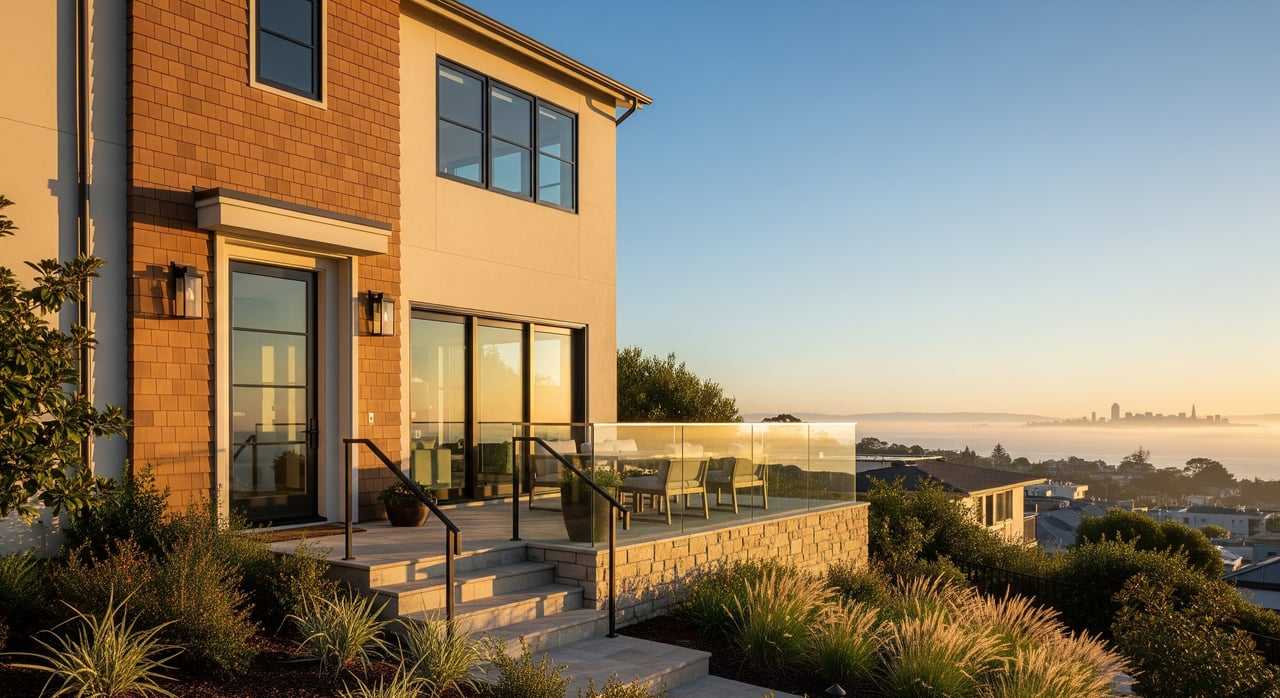
Buying your first home in Daly City can feel overwhelming, especially when prices move faster than your plans. You may be wondering how much you really need for a down payment, which loan fits your budget, and how to compete. You’re not alone. With the right financing strategy, you can shop confidently and make a smart, sustainable choice. In this guide, you’ll learn the key loan types, down payment options, and steps to get pre-approved in Daly City. Let’s dive in.
How Daly City’s market shapes financing
Daly City sits in San Mateo County, one of the Bay Area’s high-cost markets. That means the same percentage down payment translates into larger dollars, and monthly costs must account for property taxes, homeowners insurance, and any HOA fees.
Your loan size matters. If your mortgage fits within the county’s conforming loan limit, you may access more flexible conventional options. If it exceeds that limit, you’ll be in jumbo territory, which often requires stronger credit, larger down payments, and different underwriting. Conforming limits for high-cost areas change annually, so confirm current figures with a lender.
The takeaway: run numbers that include taxes, insurance, HOA dues if applicable, and realistic maintenance. This helps you target loan types that fit Daly City price points.
Loan programs for first-time buyers
FHA loans
FHA loans can help first-time buyers with more flexible credit standards. You may qualify with as little as 3.5% down if you meet FHA criteria. FHA requires mortgage insurance, including an upfront and monthly component. The cost and duration depend on the loan details and program rules, so verify current FHA mortgage insurance premiums with your lender.
Conventional low down payment
Conventional programs from Fannie Mae and Freddie Mac, including certain first-time buyer options, may allow as little as 3% down for qualified borrowers who meet income and property requirements. If you put less than 20% down, you’ll pay private mortgage insurance (PMI). PMI can usually be canceled once you reach enough equity, typically around 20%, which can lower your payment over time.
VA loans
If you’re an eligible veteran, active-duty service member, or qualifying spouse, VA loans can offer 0% down and no PMI. Most borrowers pay a one-time VA funding fee unless exempt. You’ll still need to meet lender underwriting and VA eligibility rules.
USDA loans
USDA programs also allow 0% down for eligible buyers and properties within designated areas. Daly City is generally urban and not likely eligible. If you’re open to more rural locations, check property eligibility and income limits with a lender.
Jumbo loans in San Mateo County
If the price pushes your loan above the conforming limit, you’ll likely consider a jumbo loan. These typically require higher credit scores, larger down payments (often 10% to 20% or more), and stricter debt-to-income ratios. Rates and fees can differ across lenders. Compare offers and ask about reserve requirements.
Down payment strategies
Typical minimums
- FHA: about 3.5% down, credit-dependent.
- Conventional first-time programs: as low as 3% for qualified buyers.
- VA/USDA: 0% down if you qualify.
- 20% down: avoids mortgage insurance and may improve pricing.
Larger down payments reduce loan size and may eliminate mortgage insurance. Smaller down payments preserve cash but can increase monthly costs. In a high-cost area, even low percentages can be large dollar amounts, so plan for both down payment and closing costs.
Acceptable sources of funds
- Personal savings and checking.
- Sale proceeds from another property.
- Gift funds from family or other acceptable donors (with a gift letter and documentation).
- Retirement accounts, where eligible:
- Roth IRA contributions may be withdrawn subject to IRS rules for qualified distributions.
- Traditional IRA may allow up to $10,000 penalty-free for first-time homebuyers. Income tax may still apply.
- 401(k) loans or hardship withdrawals depend on plan rules. Review repayment and tax implications.
- Down payment assistance or grants from state, county, city, nonprofit, or employer programs.
Always confirm documentation needs with your lender. Seasoning, large deposit explanations, and specific gift-letter language are common requirements.
Documentation to expect
Lenders verify where funds come from, how long they’ve been in your account, and whether they’re gifts or loans. Be ready with recent bank statements, gift letters, and proof of transfers. Some assistance programs are silent-second loans with repayment or resale conditions, so review terms carefully.
Rates, costs, and insurance
Fixed vs adjustable-rate mortgages
- Fixed-rate mortgage: The interest rate stays the same for the entire term. This predictability helps many first-time buyers in higher-cost markets plan long-term.
- Adjustable-rate mortgage (ARM): A lower initial fixed rate for a set period, then periodic adjustments. ARMs can fit buyers who expect to move or refinance before the first adjustment but carry rate-change risk later.
Points, buydowns, and APR
Paying points (1 point equals 1% of the loan amount) can reduce your interest rate. Temporary buydowns, such as a 2-1 buydown, lower the rate in early years for a cost at closing. Compare the nominal rate and APR to see the fuller cost picture when you shop.
Mortgage insurance explained
- Conventional PMI: Applies when putting less than 20% down. It can usually be canceled when you reach required equity.
- FHA MIP: Required on FHA loans regardless of down payment. The amount and duration depend on the loan’s specifics and program rules.
- VA: No monthly PMI. A one-time funding fee is common unless you have an exemption.
Include mortgage insurance in your monthly budget and compare total cost scenarios.
Closing costs and reserves
Expect closing costs in the range of about 2% to 5% of the purchase price, which include lender fees, title, escrow, recording, and prepaid taxes and insurance. Some loan types, especially jumbo, may require reserves equal to several months of payments.
Rate shopping and locks
Rates vary by lender, credit profile, down payment, and loan size. Ask for written Loan Estimates to compare fees, rates, and APR. When you find a fit, discuss a rate lock period that aligns with your closing timeline.
Pre-approval that strengthens your offer
Pre-qualification vs pre-approval
- Pre-qualification: A quick estimate based on what you share. Helpful for getting started, but not verified.
- Pre-approval: A lender reviews your documents, pulls credit, and issues a conditional commitment. In Daly City’s competitive market, a strong pre-approval helps your offer stand out.
What lenders will ask for
Have these ready to speed things up:
- Government-issued ID and Social Security number.
- Recent pay stubs (about 30 days).
- W-2s for the last 2 years and tax returns if self-employed or needed for income.
- Bank statements for the last 2 to 3 months for all relevant accounts.
- Statements for retirement or other assets you plan to use.
- Documentation of large deposits.
- List of debts and monthly obligations.
- Gift letter if receiving gift funds.
Timing and tips
Pre-approval can take several days to a couple of weeks, depending on your file. Start early, especially if using down payment assistance, which can add steps. Review your credit report with your lender to correct any errors before you shop.
California and local assistance to explore
California and San Mateo County often have programs that can reduce upfront cash needs or help with closing costs. Availability and terms change frequently.
- State programs: The California Housing Finance Agency (CalHFA) offers first-time buyer loans and down payment assistance options through participating lenders. Program names, income limits, and purchase price caps may change.
- Nonprofit and statewide options: Groups such as the Golden State Finance Authority (GSFA) have offered assistance programs through approved lenders.
- County and city resources: San Mateo County and the City of Daly City may list counseling resources, referrals, or local assistance. Income limits, purchase price caps, and resale rules can apply.
- Housing counseling and education: HUD-approved counseling agencies and nonprofit counselors can help you compare options and complete any required homebuyer education.
Many assistance programs include education requirements, income and purchase price limits, and possible resale or repayment restrictions. Confirm current details with participating lenders and agencies.
Your next steps in Daly City
- Map your budget, including taxes, insurance, and any HOA dues.
- Compare FHA, conventional, VA, and jumbo scenarios side by side.
- Check eligibility for CalHFA or other assistance through approved lenders.
- Gather documents and secure a strong pre-approval.
- Align your financing with property types common in Daly City so you can move quickly when the right home appears.
If you want a guided path from pre-approval to keys in hand, connect with Sharlyne Murphy for local insight and a clear plan tailored to Daly City and the Peninsula.
FAQs
How much down payment do I need to buy a home in Daly City?
- It depends on the loan: FHA about 3.5% with qualifying credit, conventional first-time programs as low as 3% for eligible buyers, VA/USDA 0% for those who qualify, and 20% down to avoid mortgage insurance.
Can I use gift funds for a Daly City down payment?
- Yes, most loan programs allow properly documented gifts; you’ll need a gift letter and proof of the donor’s transfer per lender rules.
What credit score is needed for first-time buyer loans near Daly City?
- Requirements vary by program and lender; FHA is often more flexible, conventional programs typically expect higher scores, and jumbo loans can require stronger credit.
What is mortgage insurance, and will I pay it on a Daly City purchase?
- Conventional loans with less than 20% down usually require PMI that you can remove with enough equity, FHA loans require MIP, and VA loans avoid PMI but may include a one-time funding fee.
Should I choose a fixed-rate or ARM in a high-cost market like Daly City?
- Fixed rates offer payment stability, while ARMs can start lower but carry adjustment risk; choose based on how long you plan to keep the loan and your tolerance for future rate changes.
What paperwork do I need for a real pre-approval?
- Expect ID, Social Security number, recent pay stubs, W-2s and possibly tax returns, bank and asset statements, debt details, and gift letters if applicable.
How do down payment assistance programs work in California?
- Many programs run through approved lenders, may require homebuyer education, and come with income, price, and occupancy rules; funding and terms change, so verify current availability early in your process.